Introduction

This product is intended to be used by professional, hired operators in commercial applications. When installed with the other required kits, the bagger hopper kit allows for mower collection during turf maintenance. It is primarily designed for mower collection on well-maintained turf. Using this product for purposes other than its intended use could prove dangerous to you and bystanders.

Read this information carefully to learn how to operate and maintain your product properly and to avoid injury and product damage. You are responsible for operating the product properly and safely.

Visit www.Toro.com for product safety and operation training materials, accessory information, help finding a dealer, or to register your product.

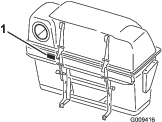
Whenever you need service, genuine Toro parts, or additional information, contact an Authorized Service Dealer or Toro Customer Service and have the model and serial numbers of your product ready. Figure 1 identifies the location of the model and serial numbers on the product. Write the numbers in the space provided.

g009416

This manual identifies potential hazards and has safety messages identified by the safety-alert symbol (Figure 2), which signals a hazard that may cause serious injury or death if you do not follow the recommended precautions.

g000502

This manual uses 2 words to highlight information. Important calls attention to special mechanical information and Note emphasizes general information worthy of special attention.

Warning

CALIFORNIA

Proposition 65 Warning

Use of this product may cause exposure to chemicals known to the State of California to cause cancer, birth defects, or other reproductive harm.

Safety

General Safety

The following list contains safety information specific to Toro products and other safety information you must know.

  • Become familiar with the safe operation of the attachment, with the operator controls, and safety signs.

  • Use extra care with bagger or other attachments. These can change the operating characteristics and the stability of the machine.

  • Follow the manufacturer's recommendations for adding or removing wheel weights or counterweights to improve stability.

  • Do not use a machine with a bagger on steep slopes. A heavy bagger could cause loss of control or overturn the machine.

  • Slow down and use extra care on hillsides. Be sure to travel in the recommended direction on hillsides. Turf conditions can affect the stability of the machine. Use extreme caution while operating near drop-offs.

  • Keep all movement on slopes slow and gradual. Do not make sudden changes in speed or direction when turning.

  • The bagger can obstruct your view to the rear. Use extra care when operating the machine in reverse.

  • Use care when loading on or unloading the machine off a trailer or truck.

  • Never operate with the grass deflector raised, removed, or altered, unless using a bagger.

  • Keep your hands and feet away from moving parts. Do not adjust the machine, cutting unit, blower, or bagger with the engine running.

  • Before unclogging or maintaining the blower, tube, of bagger, perform the following steps:

    • Park the machine on a level surface.

    • Disengage the PTO.

    • Decrease the engine speed to low/idle.

    • Move the motion-control levers or traction pedal to the NEUTRAL position.

    • Engage the parking brake.

    • Shut off engine and remove the key.

    • Wait for all moving parts to stop before leaving the operator's position.

  • If you remove the bagger, be sure to install any discharge deflector or guard that might have been removed to install the bagger. Do not operate the machine without either the entire bagger or the grass deflector in place.

  • Shut off the engine before removing the grass catcher or unclogging the tube.

  • Do not leave grass in bagger for extended periods of time.

  • Bagger components are subject to wear, damage, and deterioration, which could expose moving parts or allow objects to be thrown. Frequently check components and replace damaged or worn parts with genuine Toro parts when necessary.

Improperly using or maintaining this machine can result in injury. To reduce the potential for injury, comply with these safety instructions and always pay attention to the safety-alert symbol Graphic, which means Caution, Warning, or Danger—personal safety instruction. Failure to comply with these instructions may result in personal injury or death.

You can find additional safety information where needed throughout this manual.

Safety and Instructional Decals

Graphic

Safety decals and instructions are easily visible to the operator and are located near any area of potential danger. Replace any decal that is damaged or missing.

decal133-8061

Setup

Note: Determine the left and right sides of the machine from the normal operating position.

Installing the Required Kits

Parts needed for this procedure:

60in blower kit, Groundsmaster 7200 series triple bagger hopper (sold separately)1
72in blower kit, Groundsmaster 360 and 7200 series triple bagger hopper (sold separately)1
Hitch kit, Groundsmaster 360 multi-purpose machine (sold separately)
Hitch kit, Groundsmaster 7200/7210 series traction unit with Kubota engine (sold separately)1
Hitch kit, Groundsmaster 7210 series traction unit with Yanmar engine (sold separately)1
Weight mount bracket kit, Groundsmaster 7200 series traction unit (sold separately)1
42-pound weight for Groundsmaster 7200 series traction unit (sold separately)4

Installing the Blower Kit

Install one of the following blower kits for the cutting unit of your machine.

Refer to the Installation Instructions for the blower kit.

Cutting Unit Size

Kit (blower kits are sold separately; refer to the Parts Catalog for your machine or contact an authorized Toro distributor)

152 cm (60 inches)

60in blower kit, Groundsmaster 7200 series triple bagger hopper

183 cm (72 inches)

72in blower kit, Groundsmaster 360 and 7200 series triple bagger hopper

Installing the Hitch Kit

Install one of the following hitch kits for the cutting unit of your machine.

Refer to the Installation Instructions for the hitch kit.

Machine Model

Engine

Kit (hitch kits are sold separately; refer to the Parts Catalog for your machine or contact an authorized Toro distributor)

Groundsmaster 360 multi-purpose machine

Hitch kit, Groundsmaster 360 multi-purpose machine

Groundsmaster 7200/7210 series traction unit

Kubota

Hitch kit, Groundsmaster 7200/7210 series traction unit with Kubota engine

Groundsmaster 7200/7210 series traction unit

Yanmar

Hitch kit, Groundsmaster 7210 series traction unit with Yanmar engine

Installing the Weight Mount Bracket Kit

Groundsmaster 7200 Series Traction Unit

Install the weight mount bracket kit, Groundsmaster 7200 series traction unit (the weight mount bracket kit is sold separately; refer to the Parts Catalog for your machine or contact an authorized Toro distributor).

Installing the 42-pound Weight

Groundsmaster 7200 Series Traction Unit

Install (4 each) 42-pound weights for Groundsmaster 7200 series traction unit (the 42-pound weights are sold separately; refer to the Parts Catalog for your machine or contact an authorized Toro distributor).

Preparing the Machine

Perform the following procedure to prepare the machine for attaching the blower and finishing kit.

  1. Park the machine on level ground, disengage the PTO, the motion-control levers or traction pedal to the NEUTRAL-LOCK position, and engage the parking brake.

  2. Shut off engine and remove the key, and wait for all moving parts to stop before leaving the operator's position.

  3. Repair all bent or damaged areas of cutting unit, and replace any missing parts.

  4. Clean the machine of any debris on the deck and the rear part of the machine.

Installing the Bagger Adapter

Parts needed for this procedure:

Adapter1
Screw (1/2 x 1-3/4 inches)2
Locknut (1/2 inch)2

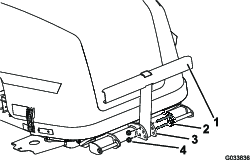
Install the adapter onto the hitch of the machine with 2 screw (1/2 x 1-3/4 inches) and 2 locknuts (1/2 inch) as shown in Figure 3.

Note: To install the hitch, refer to the hitch kit installation instructions.

g033836

Installing the Hood Assembly and Bags

Parts needed for this procedure:

Hood assembly1
Bag3
Pin and hairpin-cotter assembly2
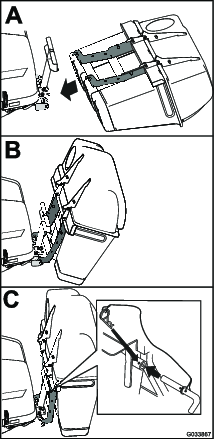
  1. Position the hood assembly on its back.

  2. Slide the hooks onto the lower mounting bracket (A of Figure 4).

  3. Rotate the hood assembly onto the lower bagger mounting bracket (B of Figure 4).

  4. Align the hole in the bagger with the upper mounting bracket (C of Figure 4).

  5. Install the pin and secure it with the hairpin cotter on both sides (C of Figure 4).

    g033867
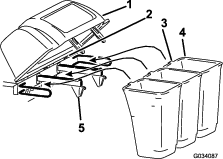
  6. Install the bag tab into the notch in the hood assembly (Figure 5).

    Note: Do this for all the bags.

    Note: The bags should rest on the bagger frame.

    g034087
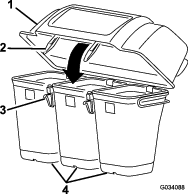
  7. Lower the bagger hood over the bags (Figure 6).

    g034088
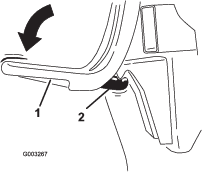
  8. Position the bagger latch under the latch hook (Figure 7).

  9. Push down on bagger latch until it locks into place (Figure 7).

    g003267

Installing the Discharge Tubes

Parts needed for this procedure:

Upper tube1
Lower tube1
Hose clamp2

Important: Ensure that the cutting unit is set to the lowest height-of-cut position while installing the discharge tubes.

Note: Remember to replace the grass deflector when the bagger is removed from the machine; refer to the blower installation instructions.

  1. Lower the cutting unit to the lowest height-of-cut position.

  2. If you started the engine to lower the cutting unit, shut off the engine, remove the key, and wait for all moving parts to stop before leaving the operating position.

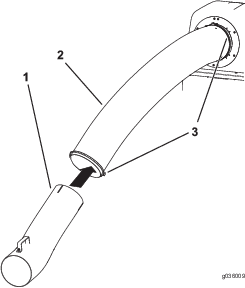
  3. Install the upper tube onto the curved tube that is already connected to the blower hood and secure the tubes with a hose clamp (Figure 8).

  4. Slide the lower tube into the upper tube (Figure 8).

  5. Secure the lower tube and upper tube with a hose clamp.

    g036009
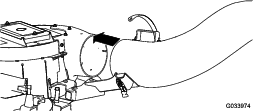
  6. Connect the tube assembly to the blower (Figure 9).

    g033974
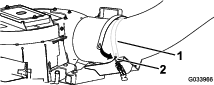
  7. Place the latch-bracket strap over the tube and secure the tube to the blower with the latch hook (Figure 10).

    g033966

Adjusting the Parking Brake

Check to make sure that the parking brake is adjusted properly; refer to your Operator’s Manual for your machine.

Checking the Tire Air Pressure

Note: Increase the tire air pressure because of the bagger weight and required kits.

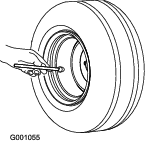
Check and increase the air pressure in the front caster wheels and rear tires (Figure 11).

Groundsmaster 360

Air pressure in all tires: 172 kPa (25 psi)

Groundsmaster 7200

Air pressure in the front caster wheels: 207 kPa (30 psi)

Air pressure in the rear tires: 138 kPa (20 psi)

g001055

Operation

Note: Determine the left and right sides of the machine from the normal operating position.

Warning

To avoid personal injury, follow these procedures:

  • Become familiar with all operating and safety instructions in the Operator's Manual for your machine before using this attachment.

  • Never remove the bagger or bagger tubes while the engine is running.

  • Park the machine on level ground, disengage the PTO, decrease the engine speed to low/idle, move the motion-control levers or traction pedal to the NEUTRAL position, engage the parking brake, shut off engine, remove the key, and wait for all moving parts to stop before clearing an obstruction from the bagging system.

  • Never do maintenance or repairs while the engine is running.

  • Engage the parking brake, shut off engine, and remove the key before leaving the machine unattended, even if just for a few minutes.

Warning

Without the grass deflector, bagger tubes or complete bagger assembly mounted in place, you and others are exposed to blade contact and thrown debris. Contact with the rotating cutting unit blade(s) and thrown debris will cause injury or death.

  • Always install the grass deflector when removing the bagger and changing to side discharge mode.

  • If the grass deflector is worn or damaged, replace it immediately. The grass deflector routes material down toward the turf.

  • Never put your hands or feet under the cutting unit.

  • Never try to clear the discharge area or cutting unit blades unless you first:

    • Disengage the PTO

    • Move the motion-control levers or traction pedal to the NEUTRAL position.

    • Engage the parking brake.

    • Shut off the engine and remove the key.

    • Wait for all moving parts to stop.

Caution

Children or bystanders may be injured if they move or attempt to operate the machine while it is unattended.

Always engage the parking brake, shut off engine, and remove the key when leaving the machine unattended, even if just for a few minutes.

Positioning the Adjustable Baffle

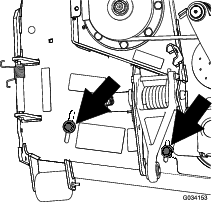
Adjust the baffle to position B (middle position) for bagging; refer to the Operator's Manual for your rotary mower.

g034153

Emptying the Grass Bags

Grass bags are heavy when full. Be careful when lifting or handling a grass bag that is full.

  1. Whenever possible, park the machine on level ground.

  2. Disengage the PTO, decrease the engine speed to low/idle, move the motion-control levers or traction pedal to the NEUTRAL position, and engage the parking brake.

    Note: If you stop on a hill, chock the tires.

  3. Unlatch the bagger latch.

  4. Open the bagger hood.

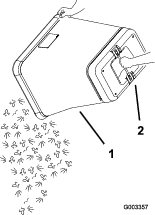
  5. Compress the debris into the bags. With both hands, lift the bag and unhook it from the bagger bracket.

  6. Grab the handle on the bottom of the bag and tip it over to empty the bag (Figure 13).

    g003357
  7. Repeat for the other bags.

  8. Install the bag tab into the notch in the bagger support frame.

    Note: Do this for all bags.

  9. Lower the bagger hood over the bags.

  10. Latch the bagger hood.

Clearing Obstructions from the Bagger System

Warning

When the operating the cutting unit, the blower rotates and can cut off or injure hands.

  • Before adjusting, cleaning, repairing, and inspecting the blower, and before unclogging the chute, disengage the PTO, decrease the engine speed to low/idle, move the motion-control levers or traction pedal to the NEUTRAL position, engage the parking brake, shut off engine, remove the key, and wait for all moving parts to stop.

  • Use a stick, not your hands, to remove an obstruction from the blower and tube.

  • Keep face, hands, feet, and any other part of your body or clothing away from concealed, moving, or rotating parts.

  1. Whenever possible, park the machine on level ground.

  2. Disengage the PTO, decrease the engine speed to low/idle, move the motion-control levers or traction pedal to the NEUTRAL position, and engage the parking brake.

    Note: If you stop on a hill, chock the tires.

  3. Shut off engine, remove the key, and wait for all moving parts to stop before leaving the operator's position.

  4. Empty the bags.

  5. Unlatch the lower tube.

  6. Remove the tubes from the bagger.

  7. Use a stick or similar object, not your hands, to remove and clear the obstruction from the tube assembly.

    Note: In most cases, the debris can be shaken out of the tubes.

  8. If the blower assembly is plugged, unlatch the bagger blower assembly, remove the belt, and swing it open.

  9. Use a stick or similar object, not your hands, to remove and clear the obstruction from the blower assembly.

  10. After you remove the obstruction, install the complete bagger system and resume operation.

Removing the Bagger

Warning

Components around engine will be hot if the machine has been running. Touching hot components can cause burns.

  • Do not touch engine components when hot.

  • Allow engine to cool before removing the bagger.

  1. Park the machine on level ground.

  2. Disengage the PTO, decrease the engine speed to low/idle, move the motion-control levers or traction pedal to the NEUTRAL position, and engage the parking brake.

  3. Lower the cutting unit deck to the lowest height-of-cut position.

  4. Shut off engine, remove the key, and wait for all moving parts to stop before leaving the operator's position.

  5. Unlatch the lower tube from the blower and remove the tube from the blower assembly.

  6. Remove the tube from the bagger hood.

  7. Unlatch the belt cover over the pulley assembly for the cutting unit.

  8. Remove the blower belt from the cutting-unit pulley.

  9. Open the blower assembly.

  10. Remove the blower assembly from the pivot hole.

  11. If you are changing to side discharge mode, install the grass deflector and lower it to working position.

  12. Remove the hood and bag assembly.

Hauling the Machine

Empty the bags of the bagger before hauling the machine; refer to Emptying the Grass Bags.

Important: Hauling the machine with grass or debris in the bagger can damage the machine.Do not leave grass or debris in the bagger while hauling the machine.

Operating Tips

Machine Size

Remember that the machine is longer and wider with this attachment installed. By turning too sharply in confined places you may damage the attachment or other property.

Trimming

Always trim with the left side of the cutting unit. Do not trim with the right side of the deck because you could damage the bagging tubes.

Cutting Height

For optimum bagging performance, set the deck height-of-cut to remove no more that 51 to 76 mm (2 to 3 inches) or 1/3 of the grass height, whichever is less. Cutting off more than this reduces vacuum-system efficiency.

Cutting Frequency

Cut the grass often, especially when it grows rapidly. You will have to cut your grass twice if it gets excessively long.

Cutting Technique

For best turf appearance, be sure to slightly overlap the cutting unit into the previously cut area. This helps reduce the load on the engine and reduces the chance of plugging the blower assembly and tubes.

Bagging Speed

The bagging system may plug if you drive too fast and the engine speed gets too slow. On hills it may be necessary to slow the ground speed of the machine. Mow downhill whenever possible.

Caution

As the bagger fills, extra weight adds to the back of the machine. If you stop and start suddenly on hills, you may lose steering control, or the machine may tip.

  • Do not start or stop suddenly when going uphill or downhill. Avoid uphill starts.

  • If you do stop the machine when going uphill, disengage the PTO. Then back down the hill using a slow speed.

  • Do not change speeds or stop on slopes.

Bagging Long Grass

If the grass grows longer than normal between the days you mow or if the grass contains a high degree of moisture, raise the cutting height higher than usual and cut and bag the grass at this setting. Then cut and bag the grass again using the lower, normal setting.

Excessively long grass is heavy and may not be blow completely into the bagger. If this happens, the tube and blower may plug. Mow the grass at a high height of cut, then lower the cutting unit to your normal cutting height and repeat the bagging process.

Bagging Wet Grass

Whenever possible, cut grass when it is dry. Wet grass can cause plugging.

Reducing Plugging

To avoid plugging the bagging system perform the following:

  • Run the machine at fast/high idle engine speed.

  • Reduce ground speed and mow the grass at a high height of cut, then lower the cutting unit to your normal cutting height and repeat the bagging process.

Signs of Plugging

As you are bagging, a small amount of grass clippings normally blows out the front of the cutting unit. An excessive amount of clipping blowout indicates that the bagger is full, or the tube is plugged.

Bagging Blades

In most mowing conditions, the standard high lift blades provide the best bagging performance.

The Toro Atomic blade is recommended for bagging leaves in dry conditions. In dry dusty conditions use the medium lift or low lift blades to reduce dust and dirt blowout while providing effective bagging air flow.

  • Refer to the rotary mower Operator's Manual for blade installing information.

  • Contact an Authorized Service Dealer for the proper blades for different mowing conditions.

Climbing a Curb or Hauling the Machine

Always lift the cutting unit to the highest position when ascending/descending a curb or loading the machine onto a trailer. Leaving the deck in a lower position may cause damage to the cutting unit while driving over a curb or loading the machine onto a trailer.

  • If a curb is higher than 152 mm (6 inches), cross the curb at a sharp angle with the deck fully raised.

  • Use extreme caution when loading the machine onto a trailer.

Maintenance

Recommended Maintenance Schedule(s)

Maintenance Service IntervalMaintenance Procedure
After the first 8 hours
  • Inspect the bagger.
  • After each use
  • Clean the hood screen.In wet grass, clean the hood screens more often.
  • Clean the bagger and bags.
  • Every 100 hours
  • Inspect the bagger.
  • Preparing the Machine for Maintenance

    Caution

    If you leave the key in the switch, someone could accidently start the engine and seriously injure you or other bystanders.

    Remove the key from the switch before you perform any maintenance.

    1. Park the machine on level ground.

    2. Disengage the PTO.

    3. Decrease the engine speed to low/idle.

    4. Move the motion-control levers or traction pedal to the NEUTRAL position.

    5. Engage the parking brake.

    6. Shut off engine and remove the key.

    7. Wait for all moving parts to stop before leaving the operator's position.

    Cleaning the Hood Screen

    Maintenance Service IntervalMaintenance Procedure
    After each use
  • Clean the hood screen.In wet grass, clean the hood screens more often.
    1. Perform the steps in Preparing the Machine for Maintenance.

    2. Open the bagger hood.

    3. Clean the debris from the screen.

    4. Close the bagger hood.

    Cleaning the Bagger and Bags

    Maintenance Service IntervalMaintenance Procedure
    After each use
  • Clean the bagger and bags.
    1. Perform the steps in Preparing the Machine for Maintenance.

    2. Wash the inside and outside of the bagger hood, bags, tube, and the underside of the cutting unit.

      Use a mild automotive detergent to remove dirt.

    3. Make sure that you remove matted grass from all parts.

    4. After washing all the parts, let them dry thoroughly.

    Note: With all parts installed, start the engine and run the PTO for a minute to assist in drying the bagger and bags.

    Inspecting the Bagger

    Maintenance Service IntervalMaintenance Procedure
    After the first 8 hours
  • Inspect the bagger.
  • Every 100 hours
  • Inspect the bagger.
    1. Perform the steps in Preparing the Machine for Maintenance.

    2. Check the upper tube, lower tube, bagger hood, and the blower assembly. Replace these parts if they are cracked or broken.

    3. Check the bags, bagger frame, and screen. Replace any parts that are cracked, torn, or broken.

    4. Tighten all loose nuts, bolts, and screws.

    Inspecting the Mower Blades

    • Inspect the mower blades regularly and whenever a blade strikes a foreign object.

    • If blades are badly worn or damaged, install new blades; refer to the rotary mower Operator's Manual for all blade maintenance procedures.

    Storage

    1. Clean the bagger attachment. Refer to Cleaning the Bagger and Bags.

    2. Inspect the bagger attachment for damage.

    3. Make sure that the bags are empty and thoroughly dry.

    4. Check the belt for wear or cracks.

    5. Store the machine in a clean, dry place, out of direct sunlight. If you must store the machine outside, cover it with a weatherproof cover. This protects the plastic parts and extends the life of the machine.

    Troubleshooting

    ProblemPossible CauseCorrective Action
    There is abnormal vibration.
    1. The cutting blade(s) is/are bent or unbalanced.
    2. The blade mounting bolt is loose.
    3. The blower pulley or pulley assembly is loose.
    4. The blower belt is worn.
    5. The blower fan blade(s) is/are bent or unbalanced.
    1. Install new cutting blade(s).
    2. Tighten the blade mounting bolt.
    3. Tighten the appropriate pulley.
    4. Replace the belt.
    5. Contact an Authorized Service Dealer.
    There is reduced bagging performance.
    1. The engine speed is low.
    2. The bagger-hood screen is plugged.
    3. Loose blower belt.
    4. The blower or tube is plugged.
    5. The bags are full.
    1. Always operate the bagger at fast/high idle engine speed.
    2. Remove the debris, leaves, or grass clippings from the screen.
    3. Replace the belt.
    4. Locate and remove the plugged debris.
    5. Empty the bags.
    The blower and tubes plug too frequently.
    1. The bags are too full.
    2. The engine speed is low.
    3. The grass is too wet.
    4. The grass is too long.
    5. The screen in the hood is plugged.
    6. The ground speed is too fast.
    7. The blower belt is worn.
    1. Dump the bags more frequently.
    2. Always operate the engine at fast/high idle engine speed.
    3. Cut the grass when it is dry.
    4. Cut no more than 51 to 76 mm (2 to 3 inches) or 1/3 of the grass height, whichever is less.
    5. Remove the debris, leaves, or grass clippings from the screen.
    6. Drive slower at fast/high idle engine speed.
    7. Replace the belt.
    There is debris blowout.
    1. The bags are too full.
    2. The ground speed is too fast.
    3. The cutting unit is not level.
    1. Dump the bags more frequently.
    2. Drive slower at fast/high idle engine speed.
    3. See the mower operator's manual for leveling the deck.
    The blower impeller does not spin freely.
    1. The blower is plugged.
    2. The impeller is not aligned.
    1. Remove the debris, leaves, or grass clippings from the blower impeller.
    2. Contact an Authorized Service Dealer.