
This product complies with all relevant European directives. For details please see the separate product specific Declaration of Conformity (DOC) sheet.

The rear roller brush kits are mounted to the reel mowers on a ride-on machine and is intended to be used by professional, hired operators in commercial applications. It is primarily designed to keep the cutting unit rear roller free of grass and debris which leads to a better after-cut appearance on well-maintained lawns in parks, sports fields, and on commercial grounds.

Setup

Important: Determine the left and right sides of the cutting unit from behind the cutting unit.

Important: Use the 18-inch Rear Roller Brush Kit is only when cutting in the height of cut range of 6 to 25 mm (1/4 to 1 inch). Use the High Height of Cut Brush, Part No. 121–3199 when cutting above 25 mm (1 inch). Refer to Installing High Height-of-Cut BrushInstalling the 18-inch High Height-of-Cut Brush (Optional). The 22-inch Rear Roller Brush Kit is already installed with the High Height-of-Cut Brush.

You may use the Rear Roller Brush Kit Model 03918 on the following cutting units for the Reelmaster 3550 Traction Unit:

  • Front 18-inch cutting unit models: 03911, 03912, 03480, 03481, 03485 or 03486.

  • Rear 22-inch cutting unit models: 03913, 03482, 03483, 03487 or 03488.

Items Required for Installation

Acquire the following tools before proceeding with the installation:

  • 1/2 inch deep-well socket

  • 9/16 inch deep-well socket

  • 7/8 inch deep-well socket

  • 1/2 inch wrench

  • 9/16 inch wrench

  • 5/16 Allen wrench

  • 12 inch straight edge (Toro Part No. 114–5446)

  • Torque wrench 20–25 N⋅m (15–19 ft-lb)

  • Torque wrench 36–45 N⋅m (27–33 ft-lb)

  • Torque wrench 47–54 N⋅m (35–40 ft-lb)

  • Torque wrench 115–128 N⋅m (85–95 ft-lb)

  • Torque wrench 2–3 N⋅m (20–25 inch-lb)

  • Blue 242 Loctite

  • Threaded Insert Tool (Toro Part No. TOR4112)

  • 5/16–18 TAP

Determining the Roller Brush Orientation

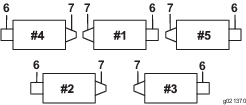
All cutting units are shipped with the counter weight mounted to the left end of the cutting unit. Use Figure 1 to determine the position of the roller brush and reel motors.

g021370

Note: These instructions and illustrations show the installation of the kit on cutting units with the end weights mounted on the left end of the cutting unit.

Installing the Roller Brush

Parts needed for this procedure:

18-inch Roller brush housing3
22-inch Roller brush housing2
Hex-socket bolt (3/8 x 1 inch) 10
18-inch Right roller brush assembly 1
22-inch Right roller brush assembly1
18-inch Left roller brush assembly2
22-inch Left roller brush assembly1
Shoulder bolt 5
18-inch Right belt cover/plate assembly1
22-inch Right belt cover/plate assembly1
18-inch Left belt cover/plate assembly2
22-inch Left belt cover/plate assembly1
Bolt (5/16 x 5/8 inch) 10
Spacer3
18-inch Drive pulley 3
22-inch Drive pulley 2
Flange head bolt (3/8 x 1 1/4 inches) 3
Flange head bolt (3/8 x 2 inches) 2
18-inch Belt 3
22-inch Belt 2
Shim Washer (As required for belt alignment) 5
18-inch Right drive shaft1
22-inch Right drive shaft1
18-inch Left drive shaft2
22-inch Left drive shaft1
90° grease fitting5
Bumper assembly1
Bolt (1/4 x 2 inches)4
Brush shaft spacer2
Driven pulley spacer2
Driven pulley2
Flange nut (3/8 inch)2
22-inch Ruler1

Procedure

  1. Park the traction unit on a level surface and engage the parking brake.

  2. Ensure that the cutting units are disengaged.

  3. Turn the engine off and remove the key.

  4. Remove all cutting units from the traction unit.

    Important: Check the cutting unit for desired height-of-cut and attitude. Reset per Operator’s Manual, if required, before installing Rear Roller Brush Kit.

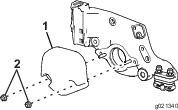
  5. Remove the nuts and the counter weights on the cutting unit (Figure 2).

    g021340
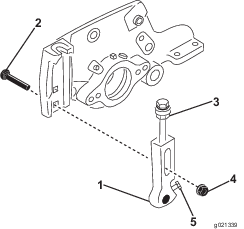
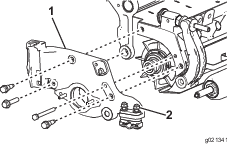
  6. For 22 inch cutting units (#2 and #3 (Figure 1) roller brush side only). Remove the height of cut brackets (Figure 3).

    g021339
  7. For 22 inch cutting units (#2 and #3 (Figure 1) roller brush side only). Remove the sideplate by removing any hardware in the way and loosening the rear roller clamp nuts (Figure 4).

    g021341
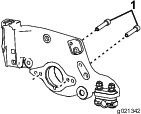
  8. For 22 inch cutting units (#2 and #3 (Figure 1) roller brush side only). Remove bolts from sideplate.

    g021342
  9. For 22 inch cutting units (#2 and #3 (Figure 1) roller brush side only). Install the sideplate and height or cut bracket back onto the cutting unit.

  10. Restrain the cutting reel for removal; refer to Restraining the Reel for Removing Threaded Inserts.

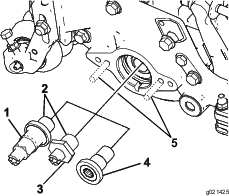
  11. Remove the cutting unit threaded insert and discard (Figure 6).

    g021425

    Note: Left-hand threaded inserts are on cutting units #1, #3, and #5 (Figure 1).

  12. Restrain the cutting reel for installation; refer to Restraining the Reel for Installing Threaded Inserts.

  13. Apply 242 Loctite (blue) to the drive shaft threads (Figure 6) and install the drive shaft, torquing it to 115–128 N⋅m (85–95 ft-lbs).

    Note: Make sure the 18-inch drive shaft is installed in the 18–inch cutting unit and the 22-inch drive shaft is installed in the 22–inch cutting unit

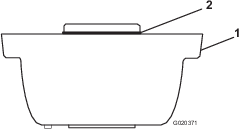
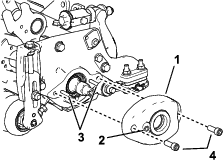
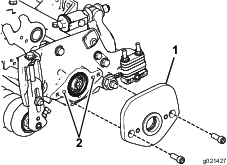
  14. Ensure that the O-ring is installed on the roller brush housing (Figure 7 and Figure 8).

    g020371
    g020394
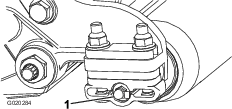
  15. On the 18-inch cutting unit only, remove the straight grease fitting near the roller brush housing and install the 90° grease fitting in the same spot (Figure 9).

    g020284
  16. Mount the roller brush housing to the reel bearing housing with 2 hex–socket Bolts (3/8 x 1 inch) (Figure 10 and Figure 11). Position the roller brush housing so that the O-ring is facing towards the cutting unit.

    Note: Make sure the O-ring is properly positioned in the roller brush housing.

    g221549
    g021427
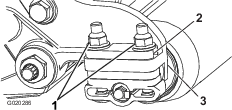
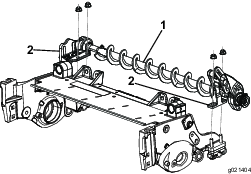
  17. Remove the 2 flange lock nuts securing each roller bracket to the side plates (Figure 12).

    Note: Do not remove the bolts. Also, remove any 6 mm (1/4 inch) spacers positioned on the top side of the side plate mounting flange.

    g020286
  18. Position the left or right roller brush assembly mounting brackets onto the roller bracket bolts (Figure 13).

    g021404
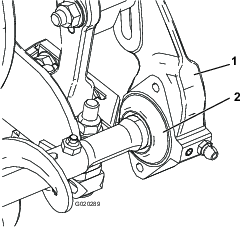
  19. Slide each excluder seal outward until the lip seals are in light contact with each bearing housing (Figure 14).

    g020289
  20. Secure the brush assembly mounting brackets to the cutting unit side plates with the nuts previously removed.

    Important: The roller brush assembly mounting brackets must be mounted directly to the top surface of the cutting unit side plate mounting flange. Do not put spacers between the roller brush mounting brackets and the side plate mounting flanges. Save the additional 6 mm (1/4 inch ) spacers for potential later use.

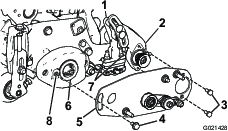
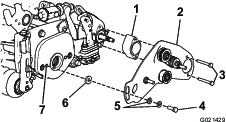
  21. Apply a coating of grease to the inner diameter of the grommet in the bearing housing (Figure 15 and Figure 16).

    g021428
    g021429
  22. Loosen but do not remove the bolts securing the roller brush bearing housing to the roller brush mounting bracket (Figure 15 and Figure 16).

  23. On the 22-inch cutting unit only, slide the brush shaft spacer into place (Figure 16).

  24. Install the left or right roller brush pivot plate (Figure 15 and Figure 16).

    Note: When the protrusion on the pivot plate is inserted into the grommet in the bearing housing, ensure that the grommet stays properly seated in the housing.

    Note: The roller brush pivot plate is properly seated when there is no resistance from the rubber grommet and it pivots freely.

    Note: Ensure that the idler-pulley assembly is installed on the bottom as shown in Figure 15 and Figure 16.

  25. Apply 242 Loctite (blue) to the 2 bolts (5/16 x 5/8 inch) and use them to mount the brush plate to the roller brush bearing housing (Figure 15 and Figure 16). Torque the bolts to 20–25 N⋅m (15–19 ft-lb).

  26. Check to make sure the roller brush plate is parallel to the cutting unit side plate. If it is not parallel, proceed as follows:

    • Loosen the 2 flange locknuts securing the roller brush mounting bracket to the cutting unit side plate (Figure 15 and Figure 16).

    • Rotate the roller brush bearing housing until the brush plate is parallel to the cutting unit side plate (Figure 15 and Figure 16).

    • Tighten the 2 flange locknuts securing the roller brush mounting bracket to the cutting unit side plate (Figure 15 and Figure 16).

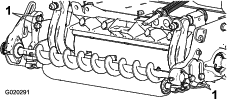
  27. Loosen the 2 bolts securing each roller brush bearing housing to the roller brush mounting bracket (Figure 17).

    g020291
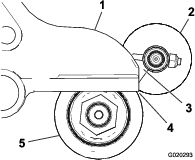
  28. Position the roller brush so it is in light contact with (i.e., just touching or resting on) the rear roller (Figure 18).

    Important: The roller brush shaft must not contact the cutting unit sideplate.

    Important: Heavy brush contact on the roller will cause premature brush wear.

    g020293

    Note: The roller brush shaft must be parallel to the rear roller.

    Note: The orientation of the non–drive roller brush bearing housing should be the same as drive side bearing housing.

  29. Tighten the 2 bolts securing each roller brush bearing housing to the roller brush mounting brackets.

  30. Use 5/16-18 TAP to clean out threading before screwing in shoulder bolt to the cutting unit (Figure 15 and Figure 16).

    Important: If treads are not cleaned out before shoulder bolt is screwed in, the bolt can break off in the threading.

  31. Apply 242 Loctite (blue) to the shoulder bolt (Figure 15 and Figure 16).

  32. Secure the brush plate to the roller brush housing with the shoulder bolt. (Figure 15 and Figure 16).

    Note: Torque the bolt to 20-25 N⋅m (15-19 ft-lb).

    Note: The shoulder bolt should not clamp the plate to the housing.

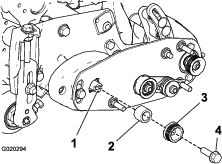
  33. Insert the spacer onto the shaft in the bearing housing (Figure 19).

    g020294
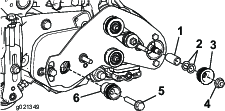
  34. Insert the drive pulley into the spacer and onto the drive shaft (Figure 19 and Figure 20).

    Note: Make sure the pulley tabs are positioned in the slot in the drive shaft.

    g021349
  35. Secure the pulley and spacer to the drive shaft with a flange head bolt (3/8 x 2 inch) (Figure 19 and Figure 20).

    Note: Torque the bolt to 47–54 N⋅m (35–40 ft-lb).

    Important: If the bolt is not properly torqued, the bolt will come loose.

  36. On the 22-inch cutting units only, install the spacer and driven pulley with a locknut (Figure 20).

  37. Install the belt onto the pulleys as follows:

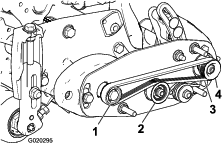
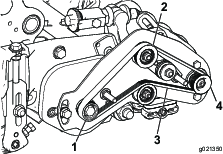
    • Loop the belt around the drive pulley and then over the top of the idler pulley (Figure 21 and Figure 22).

      g020295
      g021350
    • Install the belt on the driven pulley (Figure 21 and Figure 22).

    • Use a 9/16 inch deep-well socket to rotate the brush assembly and guide the belt onto the driven pulley (Figure 23).

      g020390

    Important: Make sure the ribs on the belt are properly seated in the grooves in each pulley. Also, make sure the belt is in the center of the idler pulley.

  38. Push down on the idler pulley to ensure that the idler-pulley assembly pivots freely.

  39. Check the alignment of the belt/pulleys as follows:

    • The belt must be properly tensioned (installed) prior to checking alignment.

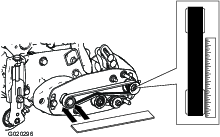
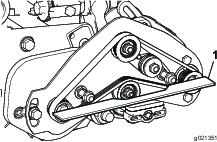
    • Lay a straight edge along the outer face of the drive pulley (Figure 24 and Figure 25). Do not lay the straight edge across both the drive and driven pulleys.

      g020296
      g021351
    • The outer faces of the drive and driven pulleys should be in line within .76 mm (.030 inch).

    • If the pulleys are not aligned, align the pulleys; refer to Checking and Adjusting the Pulley Alignment.

    • If the pulleys are aligned, continue with the installation.

    • Do not use the idler pulley to check alignment.

      Important: The belt may fail prematurely if the pulleys are not properly aligned.

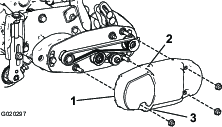
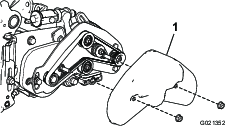
  40. Slide the belt cover onto the mounting bolts and secure with 2 flange nuts (Figure 26 and Figure 27).

    Important: Do not overtighten the nuts as damage to the cover may occur.

    g020297
    g021352
  41. Lubricate the grease fittings on each of the roller brush bearing housings with No. 2 general-purpose, lithium-base grease (Figure 28).

    g020298
  42. Wipe off any excess grease, especially around the excluder seals.

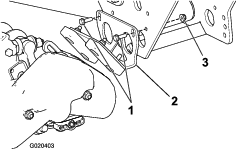
  43. For the 22-inch cutting units only, install the bumper assembly on the machine using 2 bolts and locknuts (Figure 29).

    g020403

Installing the 18-inch High Height-of-Cut Brush (Optional)

Install the High Height of Cut Brush, Part No. 121-3199 when cutting above 2.5 cm (1 inch) height-of-cut (i.e., 5 or more spacers installed below the side plate pad).

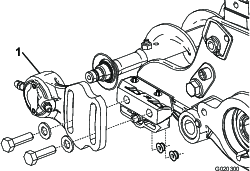
  1. If a roller brush is installed on the cutting unit, remove the 2 bolts, washers and nuts securing the non–drive bearing housing to the bearing housing mounting bracket (Figure 30) and (Figure 31).

    g020300
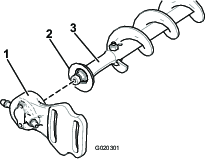
  2. Slide the non–drive bearing housing and excluder seal off the brush shaft (Figure 31).

    g020301
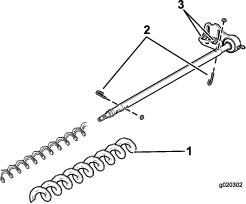
  3. Remove the 2 J-bolts and nuts (Figure 32).

  4. Slide the existing brush off the brush shaft (Figure 32).

  5. Loosen the 2 bolts, washers, and nuts securing the drive bearing housing to the bearing housing mounting bracket (Figure 32).

  6. Slide the high height of cut brush onto the brush shaft (Figure 32).

  7. Clamp the brush onto the shaft with the 2 J-bolts and nuts previously removed (Figure 32).

    Important: Insert the threaded end of the J–bolts thru the outer holes of the brush shaft while hooking the curved ends of the J–bolts into the inner holes.

  8. Torque the J–bolt lock nuts to 2–3 N⋅m (20–25 in-lb).

    g020302
  9. Install the excluder seal and the non drive bearing housing onto the brush shaft (Figure 31).

  10. Mount the non-drive bearing housing to the bearing housing mounting bracket with the 2 bolts, washers, and nuts previously removed. Be careful not to knock the seal spring off.

  11. Tighten the 2 bolts, washers, and nuts securing the drive bearing housing to the bearing housing mounting bracket.

Maintenance

  1. Ensure that the brush is parallel to the roller with 1.50 mm (0.06 inch) clearance to light contact.

  2. Grease fittings every 50 hours or after every washing.

  3. When replacing roller brush, torque J-bolts to 2 to 3 N⋅m (20 to 25 in-lb).

  4. When replacing the brush shaft driven pulley, torque the nut to 36 to 45 N⋅m (27 to 33 ft-lb).

  5. When replacing the brush drive pulley, torque the bolt to 47 to 54 N⋅m (35 to 40 ft-lb).

    Important: Backlapping at the incorrect reel speed may loosen and strip the drive pulley threads. Refer to the Cutting Unit Operator’s Manual for backlapping procedure.

  6. Roller brush, idler bearing, and belt are considered consumable items.

Checking and Adjusting the Pulley Alignment

  1. The driven pulley (at roller brush shaft) can move in or out (Figure 33).

    Note: Make note of which way the pulley needs to move.
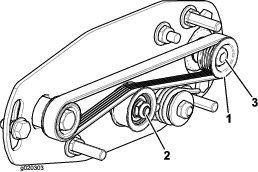
    g020303
  2. While rotating the reel, which will rotate the drive pulley, pry the belt off the drive pulley (Figure 33

    Note: Wear a padded glove or use a heavy rag to rotate the reel.

  3. Remove the lock nut securing the driven pulley to the brush shaft (Figure 33 or Figure 34).

    Note: Put a 1/2 inch wrench on the roller brush shaft flats to keep it from rotating.

  4. Remove the driven pulley from the shaft (Figure 34).

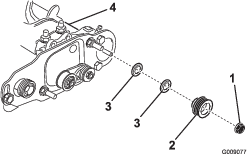
    Note: If the pulley needs to move out, add one 0.8 mm (0.032 inch) thick spacer (Figure 34). If the pulley needs to move in, remove the existing 0.8 mm (0.032 inch) thick spacer.

  5. Install the pulley.

    g009077
  6. While holding the roller brush shaft flats, secure the pulley on the shaft with the 3/8–16 flange nut previously removed.

    Note: Seat the locknut then torque it to 36 to 45 N⋅m (27 to 33 ft-lb).

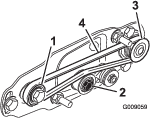
  7. Install the belt onto the pulleys as follows:

    • Loop the belt around the drive pulley and then over the top of the idler pulley (Figure 21).
      g009059
    • Start the belt on the driven pulley (Figure 21).

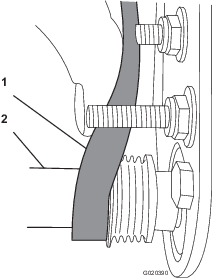
    • Use a 9/16 inch deep-well socket to rotate the brush assembly and guide the belt onto the driven pulley (Figure 36).
      g020390

    Important: Make sure the ribs on the belt are properly seated in the grooves in each pulley. Also, make sure the belt is in the center of the idler pulley.

  8. Check the pulley alignment again; repeat this procedure if necessary.

Restraining the Reel

Warning

The cutting reel blades are sharp and capable of amputating hands and feet.

  • Keep your hands and feet outside of the reel.

  • Ensure that the reel is restrained before servicing it.

Restraining the Reel for Removing Threaded Inserts

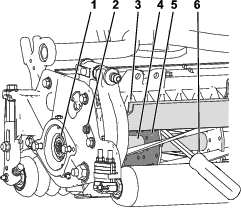
  1. Loosen the shield-bolt on the left side of the cutting unit and raise the rear shield (Figure 37).

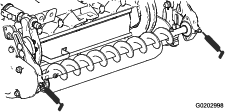
  2. Insert a long-handled pry bar (recommended 3/8" x 12" with screwdriver handle) through the back of the cutting reel, closest to the side of the cutting unit that you will be torquing (Figure 37).

  3. Place the pry bar against the weld side of the reel support plate (Figure 37).

    Note: Insert the pry bar between the top of the reel shaft and the backs of 2 reel blades so that the reel will not move.

    Important: Do not contact the cutting edge of any blades with the pry bar; this may damage the cutting edge and/or cause a high blade.

    Important: The insert on the left side of the cutting unit has left-hand threads. The insert on the right side of the cutting unit has right-hand threads.
    g280383
  4. Rest the handle of the pry bar against the rear roller.

  5. Complete the removal of the threaded insert while ensuring that the pry bar stays in place, then remove the pry bar.

  6. Lower the rear shield and tighten the shield-bolt.

Restraining the Reel for Installing Threaded Inserts

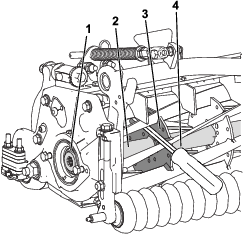
  1. Insert a long-handled pry bar (recommended 3/8" x 12" with screwdriver handle) through the front of the cutting reel, closest to the side of the cutting unit that you will be torquing (Figure 38).

  2. Place the pry bar against the weld side of the internal cutting reel reinforcement (Figure 38).

    Note: The pry bar should contact a blade at the front, the reel shaft, and a blade at the back of the back of the reel, locking it in place.

    Important: Do not contact the cutting edge of any blades with the pry bar; this may damage the cutting edge and/or cause a high blade.

    Important: The insert on the left side of the cutting unit has left-hand threads. The insert on the right side of the cutting unit has right-hand threads.
    g280384
  3. Rest the handle of the pry bar against the roller

  4. Per the insert’s installation instructions and torque requirements, complete the installation of the threaded insert while ensuring that the pry bar stays in place, then remove the pry bar.